The Ultimate Guide to Choosing Your First Collector Car with Confidence
Buying your first classic car is exciting. Whether you've admired vintage vehicles for years or you're finally ready to own one, choosing the right model can make all the difference. The best first classic car isn't necessarily the rarest or most expensive - it's the one that balances reliability, affordability, parts availability, and driving enjoyment.
Many first-time buyers worry about maintenance costs, finding replacement parts, or purchasing a vehicle that's too complicated to own. Fortunately, there are plenty of collector cars that offer an authentic classic car experience without overwhelming new enthusiasts.
This guide explores the best classic cars for beginners, what makes them great starter classics, and how to choose the right vehicle for your budget and lifestyle.
Quick Answer: What Is the Best Classic Car for a Beginner?
If you're looking for one recommendation, these are consistently among the best options:
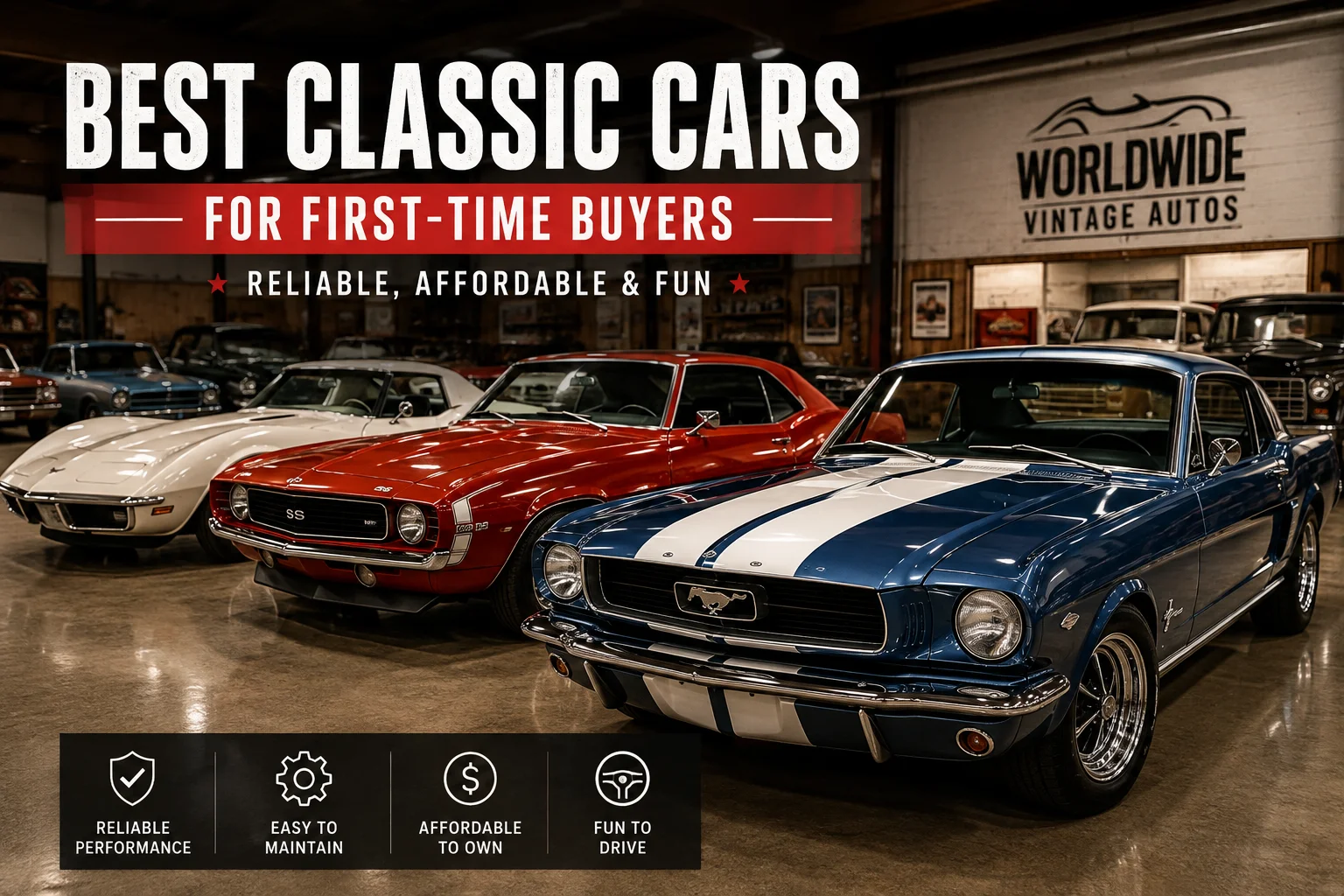
- 1965-1970 Ford Mustang
- 1967-1969 Chevrolet Camaro
- 1968-1972 Chevrolet Chevelle
- 1963-1982 Chevrolet Corvette
- 1968-1974 Dodge Dart
- 1970-1981 Pontiac Firebird
These vehicles remain popular because they combine strong enthusiast support, widely available parts, manageable maintenance, and long-term collector appeal.
What Makes a Great First Classic Car?
Not every collector vehicle is beginner-friendly.
When evaluating your options, consider these five factors.
1. Parts Availability
One of the biggest advantages of popular American classics is the enormous aftermarket support.
Vehicles like Mustangs, Camaros, and Corvettes have thousands of reproduction parts available, making repairs much easier and often less expensive.
2. Reliability
Older cars naturally require maintenance, but some models are known for being more dependable than others.
Simple V8 engines and proven drivetrains are often easier to maintain than highly specialized or limited-production vehicles.
3. Affordability
Buying the car is only part of the investment.
You'll also want to budget for:
- Insurance
- Maintenance
- Registration
- Storage
- Minor repairs
Many excellent beginner classics remain surprisingly affordable.
4. Strong Collector Community
A large enthusiast community means:
- Easier troubleshooting
- More restoration resources
- Better online forums
- Greater parts availability
Support from experienced owners is invaluable for first-time collectors.
5. Long-Term Value
While enjoyment should always come first, many buyers also appreciate vehicles with strong collector demand and long-term appreciation potential.
1. Ford Mustang (1965-1970)
Few cars are better suited for first-time buyers than the early Ford Mustang.
Why It's Great
- Huge aftermarket support
- Affordable replacement parts
- Timeless styling
- Simple mechanical design
- Strong resale demand
The Mustang offers nearly everything a new collector could want.
Whether equipped with an inline-six or V8 engine, early Mustangs provide an enjoyable ownership experience with relatively straightforward maintenance.
Best For
- Weekend cruising
- Light restoration projects
- First-time collectors
- Muscle car enthusiasts
2. Chevrolet Camaro (1967-1969)
The first-generation Camaro remains one of America's most recognizable muscle cars.
It combines aggressive styling with excellent aftermarket support and broad collector appeal.
Advantages
- Excellent parts availability
- Wide variety of engine options
- Strong investment potential
- Large enthusiast community
For buyers wanting an iconic muscle car without excessive complexity, the Camaro is difficult to beat.
3. Chevrolet Corvette (C3)
The third-generation Corvette (1968-1982) offers one of the most affordable ways to own an American sports car.
Why Beginners Love It
- Fiberglass body resists rust
- Excellent aftermarket support
- Strong enthusiast network
- Distinctive styling
Well-maintained C3 Corvettes deliver an exciting driving experience while remaining relatively approachable for new collectors.
4. Chevrolet Chevelle
The Chevelle has become one of the most respected muscle cars ever produced.
While high-performance SS models command premium prices, other versions remain attainable.
Benefits
- Comfortable ride
- Reliable drivetrain
- Easy maintenance
- Classic muscle car styling
For buyers wanting a slightly larger vehicle than a Mustang or Camaro, the Chevelle is an excellent option.
5. Pontiac Firebird
Sharing many components with the Camaro, the Firebird offers similar reliability with its own unique personality.
Highlights include:
- Affordable ownership
- Strong V8 performance
- Distinctive styling
- Good parts availability
Many enthusiasts appreciate the Firebird's individuality within the muscle car world.
6. Dodge Dart
Not every first classic car needs to be expensive.
The Dodge Dart remains one of the best values in the collector market.
Advantages
- Affordable purchase price
- Simple mechanical design
- Reliable engines
- Easier maintenance
For buyers prioritizing affordability, the Dart deserves serious consideration.
Comparing the Best Classic Cars for Beginners
| Model | Parts Availability | Maintenance | Affordability | Collector Demand |
|---|---|---|---|---|
| Ford Mustang | Excellent | Easy | High | Excellent |
| Chevrolet Camaro | Excellent | Moderate | Moderate | Excellent |
| Chevrolet Corvette C3 | Excellent | Moderate | Moderate | High |
| Chevrolet Chevelle | Excellent | Easy | Moderate | High |
| Pontiac Firebird | Very Good | Easy | High | High |
| Dodge Dart | Good | Easy | Excellent | Moderate |
Should You Buy Restored or Original?
This is one of the most common questions first-time buyers ask.
Restored Vehicles
Advantages include:
- Ready to drive
- Fewer immediate repairs
- Improved reliability
- Better appearance
Ideal for buyers who want to enjoy the car immediately.
Original Vehicles
Original cars often appeal more to collectors.
Benefits include:
- Historical authenticity
- Investment potential
- Preservation value
However, they may require more maintenance depending on condition.
Manual or Automatic?
Both options have advantages.
Manual Transmission
- Greater driver involvement
- Traditional muscle car experience
- Often preferred by enthusiasts
Automatic Transmission
- Easier for beginners
- More relaxed driving
- Better for city traffic
Choose the transmission that matches how you plan to enjoy the vehicle.
Common Mistakes First-Time Buyers Make
Avoid these frequent errors.
Buying With Emotion Alone
It's easy to fall in love with a beautiful classic.
Always inspect the vehicle carefully before purchasing.
Ignoring Documentation
Request:
- Title
- Maintenance records
- Restoration receipts
- Ownership history
Documentation adds confidence and value.
Underestimating Ownership Costs
Remember to budget for:
- Insurance
- Fuel
- Maintenance
- Storage
- Repairs
Purchasing the Cheapest Example
A higher-quality vehicle often saves money in the long run.
Poorly restored or neglected classics frequently become expensive projects.
Questions to Ask Before Buying
Before purchasing any collector vehicle, ask:
- Is the vehicle numbers matching?
- Has it been restored?
- Are restoration records available?
- Is there any rust?
- Are replacement parts readily available?
- Has the vehicle been inspected recently?
These questions help avoid costly surprises.
Why Buy From a Trusted Classic Car Dealer?
Purchasing from a reputable dealer offers several advantages.
Professional dealers often provide:
- Thorough inspections
- Accurate vehicle descriptions
- High-quality photography
- Financing options
- Nationwide shipping
- Ongoing customer support
Buying from specialists reduces uncertainty and increases buyer confidence.
Frequently Asked Questions
What is the easiest classic car to maintain?
Early Ford Mustangs and Chevrolet Camaros are generally considered among the easiest thanks to their simple mechanical design and abundant replacement parts.
What is the most affordable first classic car?
Models like the Dodge Dart, Pontiac Firebird, and certain Chevrolet Chevelles often offer excellent value for first-time buyers.
Should I buy a restored or project car?
If you're new to classic cars, a professionally restored or well-maintained driver-quality vehicle is usually the better choice.
Do classic cars hold their value?
Many desirable collector vehicles maintain or increase their value over time, particularly those with strong enthusiast demand, good documentation, and quality restorations.
Final Thoughts
Choosing your first collector vehicle doesn't have to be overwhelming.
The best classic cars for beginners combine reliability, affordability, strong parts availability, and timeless appeal. Models like the Ford Mustang, Chevrolet Camaro, Corvette, Chevelle, Firebird, and Dodge Dart continue earning their reputation because they're enjoyable to own, relatively straightforward to maintain, and supported by passionate enthusiast communities.
Rather than chasing the rarest or most expensive classic, focus on finding a well-maintained example that fits your budget and goals. The right first classic car should inspire confidence, provide years of enjoyment, and introduce you to one of the most rewarding hobbies in the automotive world.
Find Your First Classic Car
Ready to start your collector car journey?
Worldwide Vintage Autos offers a carefully curated inventory of professionally restored classics, American muscle cars, vintage sports cars, and investment-quality collector vehicles. Our experienced team can help you find the right classic for your experience level, budget, and driving goals.
Browse our available inventory today and find your first classic car with confidence.
Thinking about buying or selling a classic?
Our team works with collectors worldwide. Reach out and we will help you with the next step.