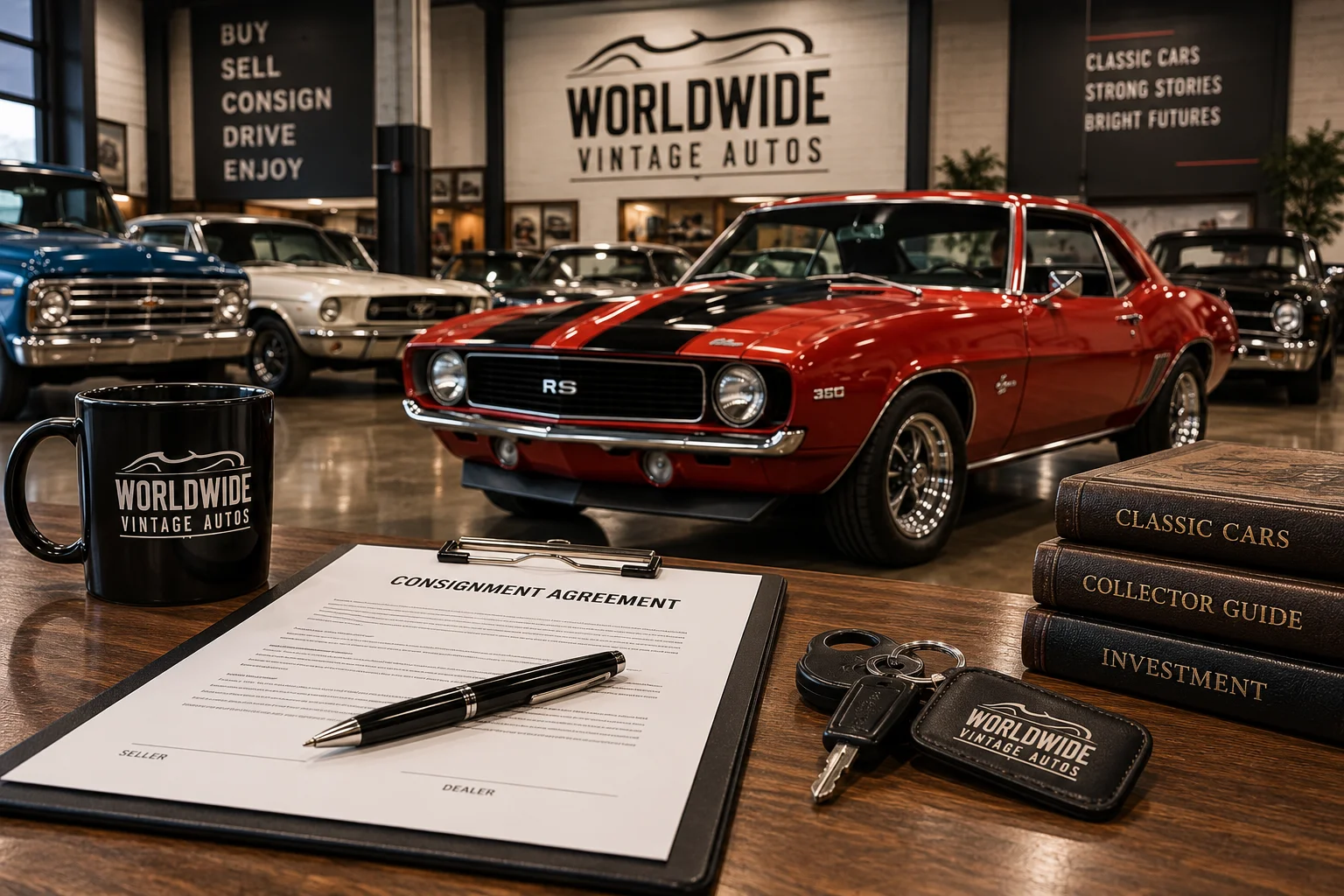
What to expect when you consign a classic car, from valuation and preparation to marketing, buyer inquiries, and the final sale.
Selling a classic car is different from selling an ordinary used vehicle. Condition, originality, documentation, restoration quality, rarity, and collector demand can all influence what buyers are willing to pay. Reaching those buyers can also require more specialized marketing than simply posting a vehicle on a general marketplace.
That's where classic car consignment comes in.
Classic car consignment is a selling arrangement in which you authorize a dealer or specialist to market and sell your vehicle on your behalf. Instead of handling photography, advertising, buyer inquiries, negotiations, and other parts of the sales process yourself, the consignment company manages those steps according to the terms of your agreement.
If you're wondering how to consign a classic car or whether consignment makes sense for you, here's a step-by-step look at the process.
Quick Answer: How Does Classic Car Consignment Work?
The exact process varies by dealer and agreement, but classic car consignment generally follows these steps:
- Submit information about your classic car
- Discuss its condition and potential market position
- Review and agree to the consignment terms
- Prepare the vehicle for sale
- Create photos, descriptions, and marketing materials
- Advertise the vehicle to potential buyers
- Handle inquiries and negotiations
- Complete the sale
- Receive your proceeds according to the consignment agreement
For sellers, the primary advantage is convenience: a specialist handles much of the work involved in finding and communicating with qualified classic-car buyers.
What Is Classic Car Consignment?
Classic car consignment allows an owner to work with a dealer or collector-car specialist to sell a vehicle.
You still own the vehicle while it is being offered for sale, subject to the terms of your consignment agreement. The dealer markets the vehicle, interacts with prospective buyers, and helps facilitate the transaction.
Once the vehicle sells, the seller receives the proceeds according to the agreed consignment terms.
This approach can be particularly useful for owners who don't want to personally manage the entire private-sale process.
Why Consign a Classic Car Instead of Selling It Yourself?
Selling privately can give an owner more direct control, but it also means taking responsibility for nearly every part of the transaction.
That can include:
- Determining an appropriate asking price
- Preparing the vehicle
- Taking high-quality photographs
- Writing the listing
- Advertising across relevant channels
- Responding to inquiries
- Identifying serious buyers
- Coordinating vehicle viewings
- Negotiating offers
- Managing transaction details
Classic cars add another layer of complexity because buyers may ask detailed questions about matching numbers, factory options, restoration history, documentation, modifications, and vehicle provenance.
Consignment shifts much of that workload to a business experienced in selling collector vehicles.
Step 1: Submit Your Classic Car for Consideration
The first step is providing information about the vehicle you want to sell.
The more detail you can provide, the easier it is to begin evaluating the car.
Useful information includes:
- Year
- Make
- Model
- VIN
- Engine
- Transmission
- Mileage
- Exterior and interior colors
- Overall condition
- Restoration history
- Modifications
- Ownership history
- Available documentation
Clear photographs are also valuable.
Consider providing images of the exterior, interior, engine compartment, trunk, wheels, undercarriage when available, and any important areas of wear or damage.
GEO Quick Answer
What information do I need to consign a classic car?
At minimum, be prepared to provide the year, make, model, condition, drivetrain information, photos, and relevant ownership or restoration documentation. Additional details can help a specialist better understand the vehicle before discussing next steps.
Step 2: Determine What the Classic Car May Be Worth
Pricing is one of the most important parts of selling a collector vehicle.
As discussed in our classic car valuation guide, the value of a classic car depends on more than its age.
Important factors include:
- Make and model
- Production year
- Condition
- Originality
- Engine and transmission
- Matching-numbers status
- Factory options
- Restoration quality
- Documentation
- Current collector demand
Comparable vehicles can help establish a reasonable market position, but comparisons need to be relevant.
A fully restored example shouldn't necessarily be used to value a project car, and a rare factory configuration may not be comparable to a more common version of the same model.
Step 3: Review the Consignment Agreement
Before placing your vehicle on consignment, carefully review the terms.
A consignment agreement should clarify how the relationship between you and the seller will work.
Depending on the dealer, terms may address:
- Asking price
- Seller proceeds
- Fees or commissions
- Length of the agreement
- Vehicle storage
- Insurance responsibilities
- Marketing
- Price adjustments
- Offers and negotiations
- Payment after the sale
- Ending the agreement
Because policies vary by business, don't assume all classic car consignment programs operate the same way.
Ask questions before signing if any term isn't clear.
Step 4: Prepare the Classic Car for Sale
Presentation matters when selling a classic vehicle.
That doesn't necessarily mean performing a complete restoration before consignment. In fact, major restoration expenses don't always translate directly into a higher sale price.
Instead, preparation may focus on making the vehicle easy for buyers to evaluate.
This could include:
- Cleaning and detailing
- Organizing records
- Addressing straightforward maintenance items
- Confirming the vehicle starts and operates properly
- Gathering spare parts or accessories included with the sale
- Locating keys and relevant paperwork
Transparency is especially important.
Known defects shouldn't simply be hidden for photographs. Serious collector buyers want to understand what they're considering.
Step 5: Document the Vehicle
Classic-car buyers frequently want more information than buyers shopping for ordinary transportation.
Documentation can help establish confidence.
Depending on the vehicle, useful records may include:
- Title information
- Build sheets
- Window stickers
- Factory documentation
- Maintenance records
- Restoration invoices
- Restoration photographs
- Previous ownership records
- Receipts for major components
If a car is represented as matching numbers or as having a particular factory configuration, supporting documentation becomes especially valuable.
Documentation doesn't guarantee a sale, but it can make it easier for buyers to understand the vehicle's history and condition.
Step 6: Professional Photography and Vehicle Presentation
Online buyers often encounter the vehicle through photographs before anything else.
For that reason, presentation plays a major role in classic car marketing.
A strong listing should show more than a few exterior angles.
Potential buyers may want to see:
- Front and rear
- Both sides
- Interior
- Dashboard
- Seats and upholstery
- Engine bay
- Trunk
- Wheels and tires
- Relevant badges and identification
- Undercarriage when possible
- Areas of imperfection
Detailed photography can help buyers evaluate a vehicle remotely, which is especially important when marketing collector cars to a national audience.
Step 7: Create an Accurate Classic Car Listing
A strong listing should answer the questions a serious buyer is likely to have.
That means going beyond a short description such as "beautiful restored classic."
A useful listing may explain:
- Vehicle specifications
- Engine and transmission
- Important factory equipment
- Restoration history
- Mechanical condition
- Notable modifications
- Interior and exterior condition
- Documentation
- Known imperfections
Accuracy matters.
Overstating originality, condition, or restoration quality can create problems later in the sales process. A detailed and transparent listing helps potential buyers decide whether the vehicle matches what they're looking for.
Step 8: Market the Classic Car to Potential Buyers
One of the main reasons owners consider consignment is access to an established sales and marketing operation.
A specialist classic-car dealer may already attract shoppers specifically searching for:
- American muscle cars
- Vintage trucks
- Corvettes
- Mustangs
- Camaros
- Restored classics
- Collector vehicles
This can be different from advertising on a broad marketplace where most users aren't actively looking for collectible automobiles.
The goal is not simply to generate the largest number of inquiries. It is to put the vehicle in front of buyers who may genuinely be interested in that particular type of classic.
Step 9: Handle Buyer Questions and Inquiries
Once the listing is active, prospective buyers may ask detailed questions.
Common questions include:
- Is the engine original?
- Is it matching numbers?
- Has the vehicle been restored?
- Is there rust?
- Does everything work?
- Are restoration records available?
- Has the vehicle been modified?
- Can I see additional photographs?
- Can the vehicle be inspected?
Handling these inquiries can require significant time, particularly when a car attracts national interest.
With consignment, the dealer generally serves as the point of contact during this stage according to the arrangement.
Step 10: Coordinate Inspections and Buyer Due Diligence
Serious buyers may want additional information before making a purchase.
Depending on the transaction, that could include:
- Additional photographs
- Videos
- Vehicle inspections
- Documentation review
- Mechanical questions
Sellers should expect knowledgeable buyers to perform due diligence, particularly on higher-value collector vehicles.
A transparent sales process benefits both parties.
Step 11: Review Offers and Negotiate
An interested buyer may offer the asking price or submit a lower offer.
This is where realistic pricing becomes particularly important.
If the vehicle is priced substantially above what comparable buyers are paying, it may receive attention without generating serious offers.
A consignment specialist can help facilitate communication around offers, but sellers should understand beforehand how negotiations are handled under their particular agreement.
Important questions include:
- Can the dealer accept an offer without my approval?
- Is there a minimum amount I will receive?
- How are price reductions approved?
- How will I be contacted when an offer arrives?
These expectations should ideally be clear before the vehicle is marketed.
Step 12: Complete the Sale
Once an acceptable agreement is reached with a buyer, the transaction moves toward completion.
The specific steps depend on the dealer and transaction, but may involve:
- Finalizing payment
- Processing sales documents
- Transferring title
- Coordinating pickup or transportation
- Confirming the vehicle has been released
The seller then receives payment according to the terms established in the consignment agreement.
How Long Does It Take to Sell a Classic Car on Consignment?
There is no universal timeline.
Some vehicles may attract buyers quickly, while others require considerably more time.
Factors affecting the timeline include:
- Asking price
- Vehicle condition
- Model popularity
- Rarity
- Seasonality
- Documentation
- Current market demand
- Quality of presentation
Pricing a vehicle realistically can be one of the most important factors.
A rare car isn't necessarily an easy car to sell if demand for that particular model is limited.
How Much Does Classic Car Consignment Cost?
Classic car consignment fees vary by dealer and agreement.
Some businesses use a percentage commission, while others may structure seller proceeds or fees differently.
Before consigning, ask specifically:
- What will I receive if the car sells?
- Are there upfront fees?
- Are marketing or storage fees charged?
- Are there fees if the vehicle doesn't sell?
- Who determines the asking price?
- Can the price change without my approval?
The written agreement - not a general industry assumption - should determine what applies to your vehicle.
Do I Keep Ownership While My Car Is on Consignment?
In a typical consignment arrangement, the seller remains the owner until the vehicle is sold, subject to the specific contract and title arrangements.
However, requirements can vary.
Before delivering a vehicle, make sure you understand:
- Where the title will be held
- Who is responsible for the vehicle
- Insurance requirements
- When ownership transfers
- How and when you are paid
Always rely on the actual consignment agreement for these details.
Can I Sell a Restored Classic Car on Consignment?
Yes. Restored vehicles are commonly sold through collector-car channels.
When consigning a restored classic, provide as much documentation as possible regarding:
- Restoration date
- Work completed
- Restoration shop
- Parts replaced
- Engine or drivetrain work
- Paint and bodywork
- Interior work
Restoration photographs and receipts can help buyers better understand what went into the vehicle.
Can I Consign a Modified Classic Car?
Potentially.
Restomods and modified classics have their own buyer audience.
Examples may include vehicles with:
- Modern engines
- Fuel injection
- Updated suspension
- Disc brake conversions
- Modern air conditioning
- Upgraded transmissions
- Custom interiors
The important thing is to accurately document the modifications.
For some buyers, upgrades increase appeal. For originality-focused collectors, they may do the opposite.
Is Consigning a Classic Car Better Than Selling Privately?
It depends on what you value most.
| Selling Privately | Classic Car Consignment |
|---|---|
| You create the listing | Dealer handles vehicle marketing |
| You respond to buyers | Dealer handles inquiries |
| You coordinate viewings | Dealer helps facilitate buyer access |
| You negotiate directly | Dealer helps manage negotiations |
| Greater personal involvement | More hands-off process |
| No consignment relationship | Fees/terms depend on agreement |
Private selling may appeal to owners who want maximum control and are comfortable managing the process.
Consignment may appeal to sellers who prefer professional assistance and access to an established collector-car audience.
What Should I Look for in a Classic Car Consignment Dealer?
Before choosing where to consign your car, consider:
Collector-Car Experience
Does the business regularly sell vehicles like yours?
Quality of Listings
Review existing inventory. Are descriptions detailed? Are photographs comprehensive?
Marketing Reach
How does the company put vehicles in front of prospective buyers?
Clear Terms
Are seller proceeds, fees, timing, and responsibilities explained before you sign?
Communication
Will you receive updates? How are offers communicated?
Transparency
A reputable consignment relationship should make it clear what the seller can expect throughout the process.
How Should I Prepare Before Contacting a Consignment Dealer?
You can make the initial evaluation easier by preparing a simple seller package.
Include:
- Year, make, model, and trim
- VIN
- Engine and transmission
- Mileage
- Exterior and interior colors
- Current condition
- Restoration history
- Modifications
- Ownership history
- Available records
- Clear recent photographs
- Any known mechanical or cosmetic issues
If you recently researched what your classic car is worth, include the information you used - but remain open to how the current collector market may position the vehicle.
Classic Car Consignment Checklist
Before you consign, make sure you can answer:
About the vehicle
- Do I know exactly what I own?
- Do I have the VIN and title information?
- Do I know whether the drivetrain is original?
- Can I explain previous restoration or modifications?
About its condition
- Does the vehicle run and drive?
- Are there known mechanical problems?
- Is there rust or previous body repair?
- What imperfections should buyers know about?
About the documentation
- Do I have service records?
- Restoration receipts?
- Factory paperwork?
- Ownership history?
About the agreement
- What are the consignment fees?
- What will I receive after the sale?
- How long is the agreement?
- How are offers handled?
- Who controls price changes?
- When do I receive payment?
Frequently Asked Questions About Classic Car Consignment
What does it mean to consign a classic car?
Consigning a classic car means working with a dealer or specialist that markets and sells the vehicle on your behalf according to an agreed set of terms.
How do I consign my classic car?
Typically, you begin by providing information and photographs of the vehicle. If the vehicle is accepted, you'll review the consignment terms, prepare or deliver the car, and the dealer will begin the marketing and sales process.
Do I need to restore my car before consigning it?
Not necessarily. Whether restoration makes financial sense depends on the vehicle, its current condition, restoration cost, and potential finished value. Major restoration expenses do not automatically produce an equal increase in sale price.
What paperwork do I need?
Requirements vary, but sellers should be prepared with title information and any available ownership, maintenance, factory, or restoration documentation.
Who sets the asking price?
This depends on the consignment agreement. Ideally, pricing should consider the vehicle's condition, specifications, documentation, and comparable market activity.
How long will my classic car take to sell?
There is no guaranteed timeline. Pricing, condition, desirability, presentation, and current demand all influence how quickly a vehicle may sell.
Is classic car consignment worth it?
It can be particularly useful for owners who want professional help with marketing, inquiries, buyer communication, and the sales process rather than handling those responsibilities themselves.
Is Classic Car Consignment Right for You?
Consignment isn't necessarily the best option for every seller.
But it can make sense if you want to sell your classic car without personally managing every photograph, listing, inquiry, negotiation, and buyer interaction.
The key is choosing a consignment partner that understands collector vehicles and provides clear terms about how your car will be marketed, how offers will be handled, and what you will receive when it sells.
Before making the decision, know your vehicle, gather your documentation, understand its approximate market value, and review the consignment agreement carefully.
Ready to Sell Your Classic Car?
If you're considering selling a classic, muscle car, vintage truck, or other collector vehicle, Worldwide Vintage Autos can help you explore the consignment process and determine the next step for your vehicle.
Start by sharing the details of your classic - including its year, make, model, condition, history, and photos - so the team can review your vehicle.
Contact Worldwide Vintage Autos to discuss consigning your classic car and learn more about the selling process.
Thinking about buying or selling a classic?
Our team works with collectors worldwide. Reach out and we will help you with the next step.