
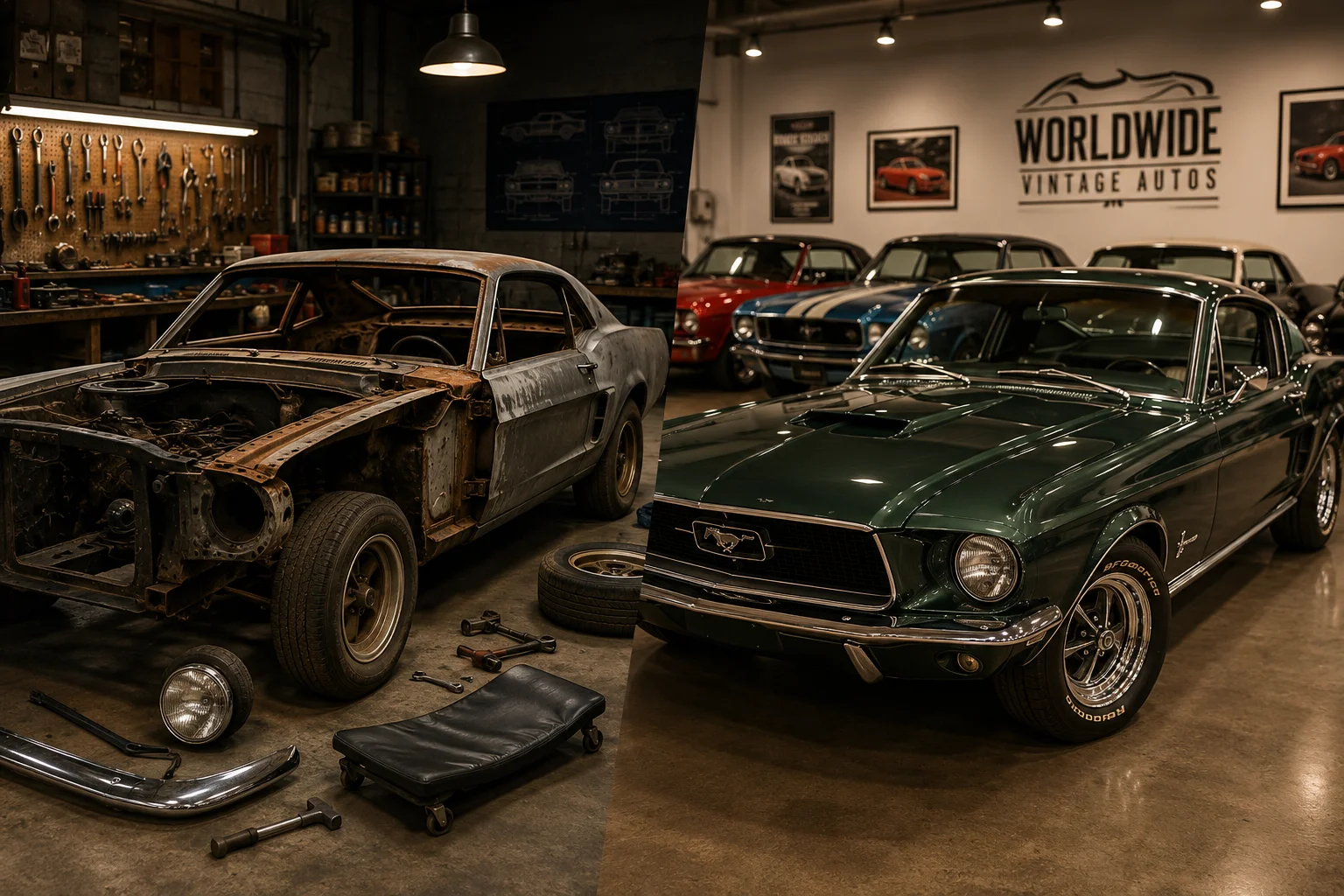
Should You Restore a Classic Car Yourself or Buy One That's Already Finished? Here's What Collectors Should Consider.
For many collectors, owning a classic car starts with one major decision: Should you buy a project and restore it, or purchase a professionally restored classic that's ready to drive?
Both approaches can be rewarding, but they involve very different levels of cost, time, risk, and involvement.
If your priority is controlling every detail and enjoying the restoration process itself, starting with a project car may make sense. If you want more predictable costs, immediate usability, and fewer surprises, buying restored classic cars is often the more straightforward path.
The better investment ultimately depends on the specific vehicle, its condition, restoration quality, purchase price, and your goals as an owner.
This guide compares classic car restoration vs. buying restored, including the true costs, potential risks, collector value, and the factors you should evaluate before making a decision.
Quick Answer: Is It Better to Restore a Classic Car or Buy One Restored?
For most buyers who primarily want to own, drive, and enjoy a classic car, purchasing a well-documented restored vehicle is generally the simpler and more predictable option.
Restoring a project car may be better if:
- You enjoy the restoration process
- You want complete control over the build
- You have mechanical experience
- You already own a desirable project vehicle
- Authenticity or a specific configuration is important to you
Buying restored may be better if:
- You want to drive the car immediately
- You prefer more predictable costs
- You don't want to manage a multi-year project
- You want to evaluate the finished product before purchasing
- You are comparing multiple collector vehicles before investing
Neither strategy automatically produces a better financial return. The quality of the vehicle and the quality of the restoration matter more than the route used to get there.
Restoration vs. Buying Restored at a Glance
| Factor | Restoring a Project Car | Buying a Restored Classic |
|---|---|---|
| Initial purchase price | Usually lower | Usually higher |
| Total cost certainty | Low | Higher |
| Time before driving | Months or years | Immediate |
| Customization | Very high | Limited |
| Risk of unexpected repairs | High | Lower with inspection |
| Personal involvement | Extensive | Minimal |
| Restoration management | Required | Already completed |
| Ability to inspect final quality | Only after completion | Before buying |
| Best for | Hobbyists and hands-on enthusiasts | Buyers who want a finished vehicle |
What Does Classic Car Restoration Actually Involve?
A true classic car restoration can involve far more than repainting the body or rebuilding the engine.
Depending on the starting condition and desired result, restoration may include:
- Complete vehicle disassembly
- Rust and structural repair
- Body panel replacement
- Paint and bodywork
- Engine rebuilding
- Transmission restoration
- Suspension and brake work
- Electrical repairs
- Interior restoration
- Chrome and trim restoration
- Wheel and tire replacement
- Final assembly and tuning
A full restoration can require hundreds - or in highly detailed projects, thousands - of labor hours.
That means a seemingly inexpensive project vehicle can eventually require a substantial investment.
What Does "Restored Classic Car" Mean?
A restored classic car is a vehicle that has already undergone some level of mechanical, cosmetic, or structural restoration.
However, the word "restored" can describe very different levels of work.
Cosmetic Restoration
Primarily focused on appearance.
May include:
- Paint
- Interior refurbishment
- Chrome
- Wheels and tires
Mechanical systems may remain largely untouched.
Driver-Quality Restoration
Designed to create a reliable and attractive vehicle that can be regularly enjoyed.
Usually includes:
- Mechanical repairs
- Suspension and brake work
- Interior improvements
- Body and paint restoration
Full Restoration
A much more extensive rebuild intended to restore the vehicle comprehensively.
This can include:
- Complete disassembly
- Body and frame work
- Powertrain rebuilding
- Interior restoration
- Electrical work
- Factory-correct components
When evaluating restored classic cars for sale, understanding which type of restoration was performed is critical.
The Cost of Restoring a Classic Car
One of the biggest challenges with restoration is that the original budget is rarely the entire story.
Restoration costs depend on:
- Starting condition
- Rust severity
- Vehicle rarity
- Parts availability
- Labor rates
- Desired restoration quality
- Mechanical condition
A relatively complete vehicle with a solid body may require considerably less work than a car with structural corrosion, missing components, or a damaged drivetrain.
Why Restoration Budgets Can Grow Quickly
The biggest cost increases often happen after disassembly.
A vehicle that looks acceptable from the outside may hide:
- Rust beneath paint
- Previous collision repairs
- Improper bodywork
- Damaged floor pans
- Electrical problems
- Non-original parts
- Mechanical wear
These issues may not become obvious until work has already begun.
This is why a project car's purchase price should never be treated as its true cost.
The Financial Case for Buying Restored
Buying a restored vehicle usually requires more money upfront, but it can provide greater cost clarity.
Instead of paying separately for:
- The project car
- Labor
- Parts
- Paint
- Engine work
- Upholstery
- Unexpected repairs
you are purchasing the completed result.
This makes it much easier to compare the asking price against other finished vehicles in the collector market.
You can also inspect the actual restoration instead of hoping a future project meets expectations.
Does Restoring a Classic Car Increase Its Value?
A quality restoration can increase the value of the right vehicle, but restoration cost and market value are not the same thing.
For example, an owner could spend heavily restoring a relatively common vehicle without increasing its resale value by the same amount.
Collector value depends on factors such as:
- Make and model
- Rarity
- Engine and transmission
- Originality
- Documentation
- Market demand
- Restoration quality
This is why restoration should not automatically be viewed as a guaranteed investment strategy.
When Restoration Can Make Financial Sense
Restoration becomes more compelling when the starting vehicle has qualities collectors already value.
Examples include:
- Rare configurations
- Desirable performance packages
- Matching-numbers drivetrains
- Strong documentation
- Historically significant models
In these cases, preserving or returning the vehicle to a high standard may support long-term collector appeal.
When Buying Restored Can Be the Better Value
Buying restored may offer better value when the finished vehicle can be purchased for less than the cost of recreating the same restoration yourself.
This situation is not uncommon.
Previous owners may have invested significant amounts in:
- Professional paint
- Engine rebuilding
- Interior work
- Suspension
- Chrome
- Mechanical improvements
The next buyer can sometimes acquire the completed vehicle without absorbing every dollar originally spent on the restoration.
For buyers focused primarily on ownership rather than the restoration experience, this can be especially attractive.
Time Is Part of the Investment
Money isn't the only consideration.
Restoring a classic car can take:
- Months
- Multiple years
- Occasionally even longer
Delays can happen because of:
- Parts availability
- Shop scheduling
- Custom fabrication
- Additional repairs
- Budget changes
During that time, the vehicle may not be drivable.
Buying restored allows you to bypass most of that process and begin enjoying the vehicle much sooner.
The Advantage of Controlling Your Own Restoration
Of course, restoring a vehicle yourself offers something buying completed cannot: control.
You can decide:
- Paint color
- Interior materials
- Engine configuration
- Suspension setup
- Wheels
- Brakes
- Original vs. modern components
For enthusiasts who view the build as part of the experience, this can make restoration worthwhile even when it isn't the least expensive option.
Original Restoration vs. Restomod
Another important decision is whether the goal is historical authenticity or modern drivability.
Factory-Correct Restoration
Attempts to reproduce the vehicle's original specifications.
Often prioritized by collectors who value:
- Matching numbers
- Original equipment
- Factory colors
- Period-correct components
Restomod
Combines classic appearance with modern technology.
Common improvements include:
- Fuel injection
- Modern brakes
- Updated suspension
- Air conditioning
- Modern engines or transmissions
Neither approach is universally better.
The right choice depends on whether you value originality, comfort, performance, or a combination of all three.
How Restoration Quality Affects Investment Potential
A restoration is only valuable if the work is done well.
Poor restoration work can create long-term problems and may actually reduce desirability.
Before purchasing a restored vehicle, inspect:
- Paint consistency
- Panel gaps
- Rust repairs
- Weld quality
- Undercarriage condition
- Engine installation
- Electrical wiring
- Interior craftsmanship
Documentation is equally important.
Restoration invoices, photographs, parts records, and ownership history can help verify what work was completed.
Is an Original Car Better Than a Restored Car?
Not necessarily.
A highly original survivor can be extremely desirable because it preserves the vehicle's history.
However, originality alone doesn't guarantee quality.
An original vehicle may still have:
- Mechanical wear
- Aging wiring
- Interior deterioration
- Paint damage
- Rust
Meanwhile, a professionally restored vehicle may offer excellent condition and reliability.
Collectors should evaluate condition, originality, documentation, and intended use together.
What Is Better for a First-Time Classic Car Buyer?
For many first-time buyers, a well-sorted restored or driver-quality vehicle is easier to own than a major restoration project.
Why?
Because the buyer can evaluate the car as it exists today.
A first-time collector can:
- Inspect the finished vehicle
- Test drive it
- Review documentation
- Understand its current condition
- Begin enjoying it immediately
A project car requires considerably more planning and knowledge.
Questions to Ask Before Buying a Restored Classic
Before purchasing, ask:
Who completed the restoration?
Professional restoration shops may provide documentation that helps validate the work.
When was it restored?
A restoration completed twenty years ago may need additional maintenance today.
Is there photographic documentation?
Photos taken during restoration can help reveal the quality and extent of the work.
Which components are original?
Ask specifically about:
- Engine
- Transmission
- Body panels
- Interior
- Trim
Has the vehicle been driven since restoration?
A vehicle that has been properly driven and maintained after restoration may reveal fewer surprises than one that has remained unused.
Questions to Ask Before Buying a Project Car
If you're considering restoring instead, investigate the starting vehicle carefully.
Ask:
- Is the title clean?
- Is the VIN correct?
- Does the car run?
- How extensive is the rust?
- Is the drivetrain original?
- Which parts are missing?
- Are replacement parts available?
- Has the vehicle been modified?
- Has previous restoration work been attempted?
Buying the right project car can significantly reduce future restoration headaches.
Classic Car Restoration vs. Buying Restored: Which Is Better for Investment?
There isn't a universal winner.
Restoration may be the better choice when:
- You already own a desirable project
- The vehicle is rare or historically important
- You can control restoration costs
- You have access to trusted specialists
- You value the restoration process itself
Buying restored may be the better choice when:
- You want greater cost predictability
- You want to drive immediately
- You prefer to inspect the finished result
- You don't want to manage contractors or parts
- You find a completed vehicle priced attractively relative to restoration cost
For many collectors, the best investment isn't simply "restored" or "original." It is a high-quality vehicle purchased at a sensible price with strong documentation and continued buyer demand.
Frequently Asked Questions
Is it cheaper to restore a classic car or buy one restored?
Buying restored can sometimes be less expensive than completing an equivalent professional restoration yourself, particularly when labor, paint, parts, and unexpected repairs are considered.
However, every vehicle and restoration is different.
How much does it cost to restore a classic car?
There is no universal restoration cost. Expenses depend heavily on the vehicle's condition, parts availability, labor requirements, and restoration standard.
A cosmetic refresh and a complete frame-off restoration are fundamentally different projects.
Are restored classic cars worth more?
A quality restoration can improve a vehicle's value, but the market still considers rarity, originality, specifications, documentation, and collector demand.
The cost of restoration does not automatically equal added market value.
Is a matching-numbers car better than a restored car?
These aren't mutually exclusive. A matching-numbers vehicle can also be restored.
Matching numbers may increase collector appeal because major components remain associated with the original vehicle.
Is a restored classic car good for a first-time buyer?
Often, yes. A properly restored or well-maintained driver-quality classic allows a first-time buyer to evaluate a finished vehicle instead of managing a complex restoration project.
What should I inspect on a restored classic car?
Review the body, paint, undercarriage, drivetrain, electrical system, interior, VIN, documentation, and restoration records. A pre-purchase inspection is also highly valuable.
Final Verdict: Restore or Buy Restored?
Choose restoration if building the car is an important part of the experience and you're comfortable managing the time, expense, and uncertainty.
Choose a restored classic if your priority is owning a finished car, understanding what you're buying, and getting on the road sooner.
From an investment perspective, neither route guarantees a better return. What matters is buying the right vehicle, verifying its history and condition, understanding the true cost, and selecting a car with lasting collector appeal.
The best investment is ultimately a classic you can confidently own, properly maintain, and genuinely enjoy.
Browse Restored Classics
Want the classic-car experience without starting with years of restoration work?
Worldwide Vintage Autos offers a broad selection of restored classic cars for sale, including American muscle cars, vintage sports cars, trucks, and collectible vehicles.
Explore available restored classics, compare different makes and models, and find a vehicle that fits your goals as a driver or collector.
Browse Restored Classics:
https://www.worldwidevintageautos.com/vehicles
Have questions about a vehicle's condition, restoration, or history? Contact the Worldwide Vintage Autos team for more information before you buy.
Thinking about buying or selling a classic?
Our team works with collectors worldwide. Reach out and we will help you with the next step.