The Essential Buyer's Guide to Verifying Authenticity Before Investing in a Collector Vehicle
Buying a classic car is exciting, but it also requires careful research. Whether you're purchasing your first collector vehicle or adding to an established collection, one question should always come first: How can you tell if a classic car is original?
Originality is one of the biggest factors influencing a classic car's value, collectibility, and long-term investment potential. While a beautifully restored vehicle may look impressive, hidden modifications, replacement parts, or incorrect documentation can significantly impact its worth.
Fortunately, there are several ways to verify whether a vehicle retains its factory originality before making a purchase.
In this guide, we'll explain how to tell if a classic car is original, what "matching numbers" really means, how to inspect documentation, and the warning signs every buyer should know before purchasing a collector vehicle.
Why Originality Matters
In the collector car market, originality often separates an ordinary classic from an investment-grade vehicle.
Original vehicles typically command higher prices because they preserve automotive history and provide greater confidence for future buyers.
Originality can affect:
- Market value
- Auction performance
- Insurance valuation
- Long-term appreciation
- Historical significance
While professionally restored cars can also be valuable, collectors generally pay premiums for vehicles that retain their original components.
What Does "Original" Mean?
An original classic car generally retains the major components it left the factory with.
This often includes:
- Original engine
- Original transmission
- Original body panels
- Factory VIN plate
- Original trim
- Factory interior (or correctly restored original materials)
Keep in mind that very few older vehicles remain 100% untouched. Routine maintenance items, tires, batteries, hoses, and other wear components are expected to have been replaced over time.
The goal is determining whether the vehicle has maintained its core identity.
Understanding Matching Numbers
One of the most important terms in collector car ownership is matching numbers.
A matching-numbers vehicle retains the original engine and drivetrain installed by the manufacturer when the vehicle was built.
Depending on the make and model, matching numbers may include:
- Engine block
- Transmission
- Rear axle
- Cylinder heads
- Intake manifold
Because factory-installed components are highly desirable, matching-numbers vehicles often bring significantly higher values.
Start With the VIN
The Vehicle Identification Number (VIN) is your first step when evaluating originality.
The VIN helps confirm:
- Production year
- Manufacturer
- Assembly plant
- Body style
- Engine designation (on many models)
Compare the VIN against:
- Vehicle title
- Registration
- Build documentation
- Door tag
- Dashboard plate
If numbers don't match or appear altered, investigate further before purchasing.
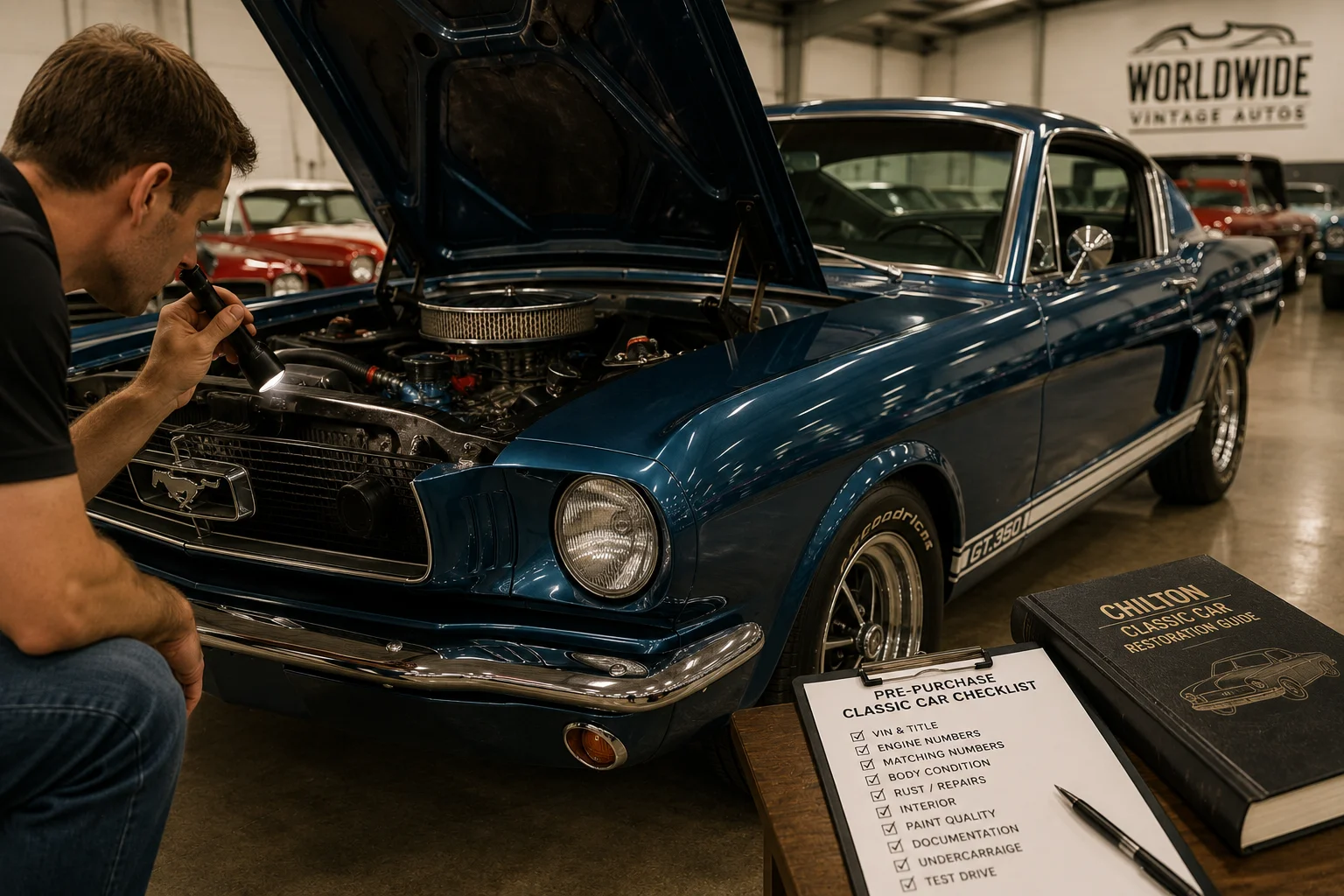
Check the Engine Numbers
Many classic vehicles feature stamped engine numbers that can be compared with factory records.
Look for:
- Correct engine casting numbers
- Assembly dates
- Stamped serial numbers
- Factory engine codes
These numbers should align with the vehicle's production timeline.
For example, an engine manufactured years after the car itself may indicate a replacement.
Verify Production Dates
Original parts were manufactured shortly before the vehicle was assembled.
Check date codes on components such as:
- Engine block
- Transmission
- Differential
- Carburetor
- Alternator
- Distributor
While dates don't need to be identical, they should generally fall within a reasonable production window.
Inspect the Body Carefully
Body panels reveal a great deal about a vehicle's history.
Examine:
- Door gaps
- Hood alignment
- Fender fitment
- Weld seams
- Floor pans
- Trunk floor
- Frame rails
Uneven panel gaps or inconsistent welds may indicate collision repairs or major body replacements.
Look for Signs of Rust Repair
Rust is one of the biggest challenges in classic car ownership.
Inspect areas such as:
- Rocker panels
- Wheel wells
- Lower doors
- Floor pans
- Frame rails
- Trunk
Fresh undercoating or unusually thick paint may conceal previous repairs.
Professional restorations are common, but buyers should understand exactly what was repaired.
Review the Interior
Original interiors often provide valuable clues about authenticity.
Look for:
- Factory upholstery patterns
- Original dashboard
- Correct gauges
- Factory steering wheel
- Original trim pieces
Although many interiors have been restored, quality restorations should closely replicate factory specifications.
Examine Paint Quality
Ask whether the vehicle still wears its factory paint or has been repainted.
A repaint isn't necessarily negative, but buyers should know:
- Why it was repainted
- Whether color changes occurred
- If bodywork accompanied the repaint
Paint thickness gauges can sometimes help identify previous repairs.
Request Documentation
Documentation is one of the strongest indicators of originality.
Important records include:
- Original window sticker
- Build sheet
- Protect-O-Plate (when applicable)
- Maintenance records
- Restoration receipts
- Ownership history
The more documentation available, the easier it becomes to verify the vehicle's authenticity.
Understand Restoration History
A restored vehicle can still be highly collectible.
Ask:
- When was the restoration completed?
- Who performed the work?
- Were original parts retained?
- Are restoration photographs available?
Professional documentation increases buyer confidence considerably.
Watch for Non-Original Modifications
Many classic cars have been modified over the years.
Common upgrades include:
- Modern wheels
- Electronic ignition
- Disc brake conversions
- Air conditioning
- Fuel injection
- Suspension upgrades
These improvements may increase drivability but reduce originality.
If investment value is your priority, factory-correct vehicles often remain the better choice.
Inspect the Undercarriage
Never overlook the underside.
Check for:
- Rust
- Frame damage
- Floor repairs
- Suspension condition
- Fuel line routing
- Brake line quality
The undercarriage often tells the true story of a vehicle's condition.
Have the Vehicle Professionally Inspected
Even experienced collectors benefit from independent inspections.
A qualified specialist can verify:
- Structural integrity
- Mechanical condition
- Restoration quality
- Original components
- Potential hidden issues
The inspection cost is minimal compared to the price of most collector vehicles.
Red Flags to Watch For
Be cautious if you notice:
- Missing VIN plates
- Inconsistent serial numbers
- Incomplete documentation
- Seller unwilling to answer questions
- Poor-quality restoration work
- Fresh paint hiding structural repairs
These issues don't automatically mean you should walk away - but they do require further investigation.
Original vs. Restored: Which Is Better?
Many buyers assume original is always better.
In reality, it depends on your goals.
Original Vehicles
Best for:
- Investment collectors
- Historical preservation
- High-end auctions
Restored Vehicles
Ideal for:
- Weekend driving
- Car shows
- Reliability
- Enjoyment
A professionally restored vehicle with excellent documentation can still represent an outstanding purchase.
Buying From a Trusted Dealer
One of the easiest ways to reduce risk is purchasing through an experienced classic car dealer.
Reputable dealerships typically provide:
- Detailed descriptions
- Professional photography
- Honest condition reports
- Vehicle history information
- Restoration details
- Customer support
Working with specialists can make the buying process much more transparent.
Final Thoughts
Learning how to tell if a classic car is original is one of the most valuable skills any collector can develop.
From verifying VINs and matching numbers to reviewing documentation and inspecting restoration quality, taking the time to evaluate authenticity helps protect both your investment and your peace of mind.
While no classic vehicle is perfect, understanding what to look for before buying allows you to purchase with confidence and avoid costly surprises.
Whether you're searching for a survivor, a professionally restored collector car, or your dream muscle car, authenticity always matters.
Speak With Our Team
Looking for an authentic, professionally represented classic car?
At Worldwide Vintage Autos, we carefully curate our inventory and provide detailed information to help buyers make informed decisions with confidence.
Whether you're looking for an original survivor or a beautifully restored collector vehicle, our team is here to help.
Browse our inventory or contact us today to find the right classic car for your collection.
Thinking about buying or selling a classic?
Our team works with collectors worldwide. Reach out and we will help you with the next step.